
Home › Turfing & lawns
Soft landscapingTURFING & NEW LAWNS
Most failed lawns round here failed because there was nothing underneath them. On the chalk around Berkhamsted and Tring the topsoil can be a couple of inches deep; on the clay in Hemel it holds water all winter. Both need dealing with before a single roll goes down.
Or call Connor direct on 07738 008077
Turf is the cheap part of a lawn. What it is sitting on is the expensive part, and it is the part that decides whether you have a lawn in three years or a brown patch you keep apologising for.
The ground round here
Chalk — Berkhamsted, Tring, the higher ground
Free-draining, alkaline, and often with only a few inches of soil over solid chalk. Turf laid onto that has nothing to root into and no reserve of moisture, so it browns off in the first dry spell in June and never really recovers. The fix is real imported topsoil to a genuine depth — 150mm as a minimum, more where we can. It costs more on day one and it is the whole job.
Clay — Hemel Hempstead and the valley bottoms
The opposite problem. Water sits, the ground stays sodden through the winter, moss takes over and the lawn is unusable from November to March. Clay needs breaking up, improving and often draining before topsoil goes on. Laying turf straight onto compacted clay is laying turf onto a pond liner.
Building spoil
Any garden behind a new extension is likely to have a layer of rubble, sand and mortar droppings under a skim of soil. It has to come out. This is the single most common reason a lawn laid by a builder fails within two years.
What we actually do
- Strip out the old lawn, weeds and any rubble
- Break up the compaction underneath — a rotavated crust over a solid pan is not preparation
- Import and spread topsoil to a real depth, screened, not builders’ soil full of stones and roots
- Level and consolidate, then rake to a fine tilth. Any hollow you leave now is a puddle for the next twenty years
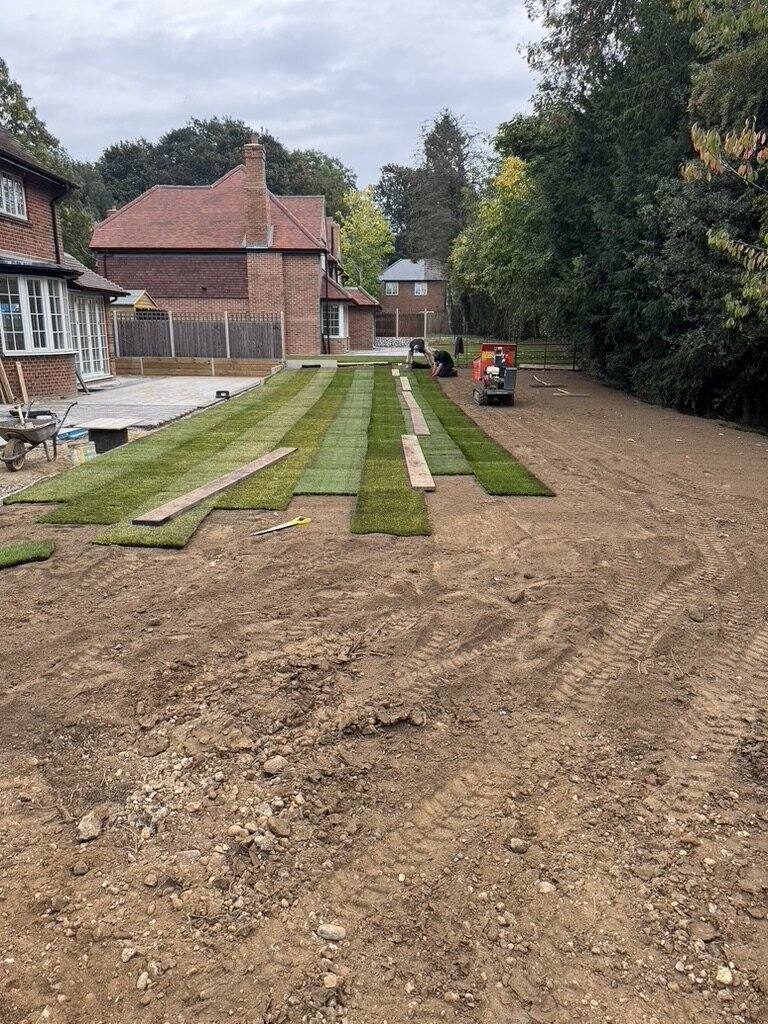
- Lay the turf in a stretcher bond with tight joints, cut in to the edges, and roll or tamp it down
- Water it in properly before we leave, and tell you exactly what to do for the next month
Turf or seed?
Turf gives you an instant lawn and can go down through most of the year. It costs more and it needs watering religiously for the first few weeks. Seed is far cheaper, gives you a better-rooted lawn in the long run, and demands patience and a spring or early autumn sowing — plus keeping everyone and the dog off it. For most gardens with children we lay turf. For a large area on a budget, seed is worth the wait.
The first month decides it
New turf dies of thirst, not of anything else. It needs a genuine soaking every day in warm weather for the first two to three weeks — enough to wet the soil beneath, not a light sprinkle that only damps the top. Keep off it as much as you can until it has knitted down, then start mowing high, taking only the top off.
We leave you written instructions rather than saying it at the gate and hoping. Getting this month right is worth more than anything else you will ever do to the lawn.
Shade, trees and the honest answer
Grass will not grow in deep shade under a mature beech or conifer, and no turf variety fixes that. Where a lawn is failing because of the tree above it, the options are a crown reduction or lift to get light down, a shade-tolerant mix that will be thin but alive, or giving up on grass there and planting or paving instead. We will tell you which of those we think it is. Laying fresh turf into deep shade is taking your money for something that will die.
How we work
- Free site visit. We walk the garden with you, talk it through, sketch a rough plan on the spot and take measurements
- Detailed written quotation within 48 hours. Itemised, so you can see what each part costs and leave out anything you’d rather not do yet
- We build it on agreed dates, with our own team doing the clearing, groundwork and construction
- Everything goes. We’re licensed waste carriers, so the spoil and arisings leave legally and the paperwork exists
We don’t put prices on the website. The same job on a flat plot with a drive to the back, and on a sloping garden you can only reach through the house, are genuinely different jobs — any figure here would be a guess. The visit is free and gets you a real number.
Related work
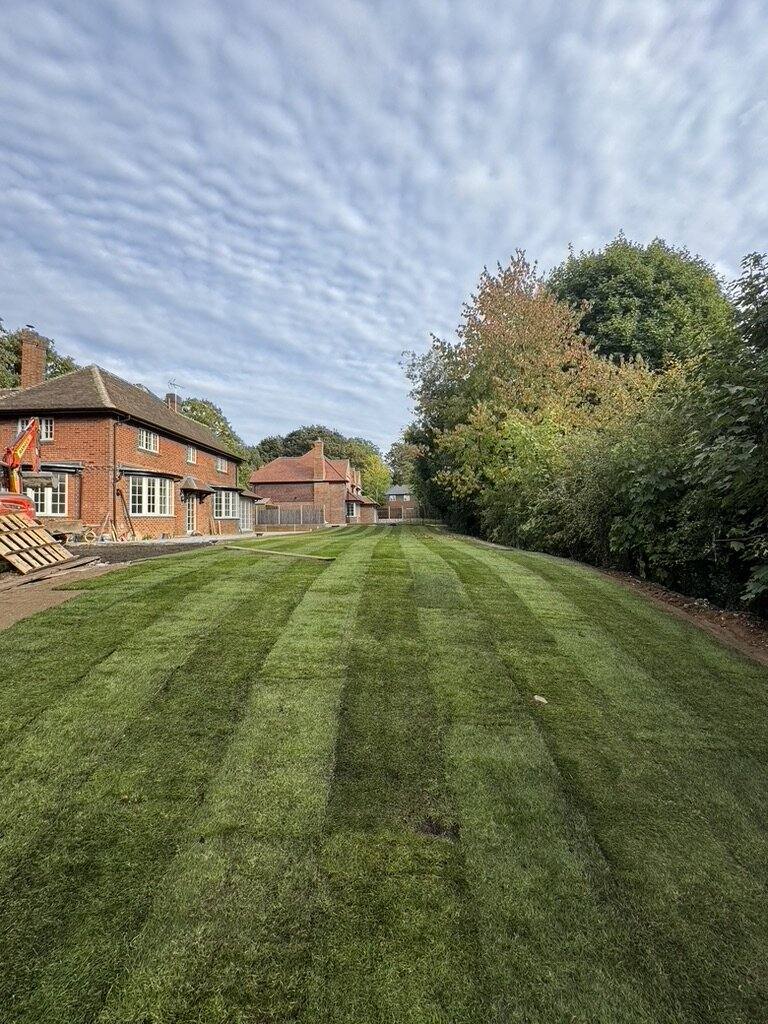
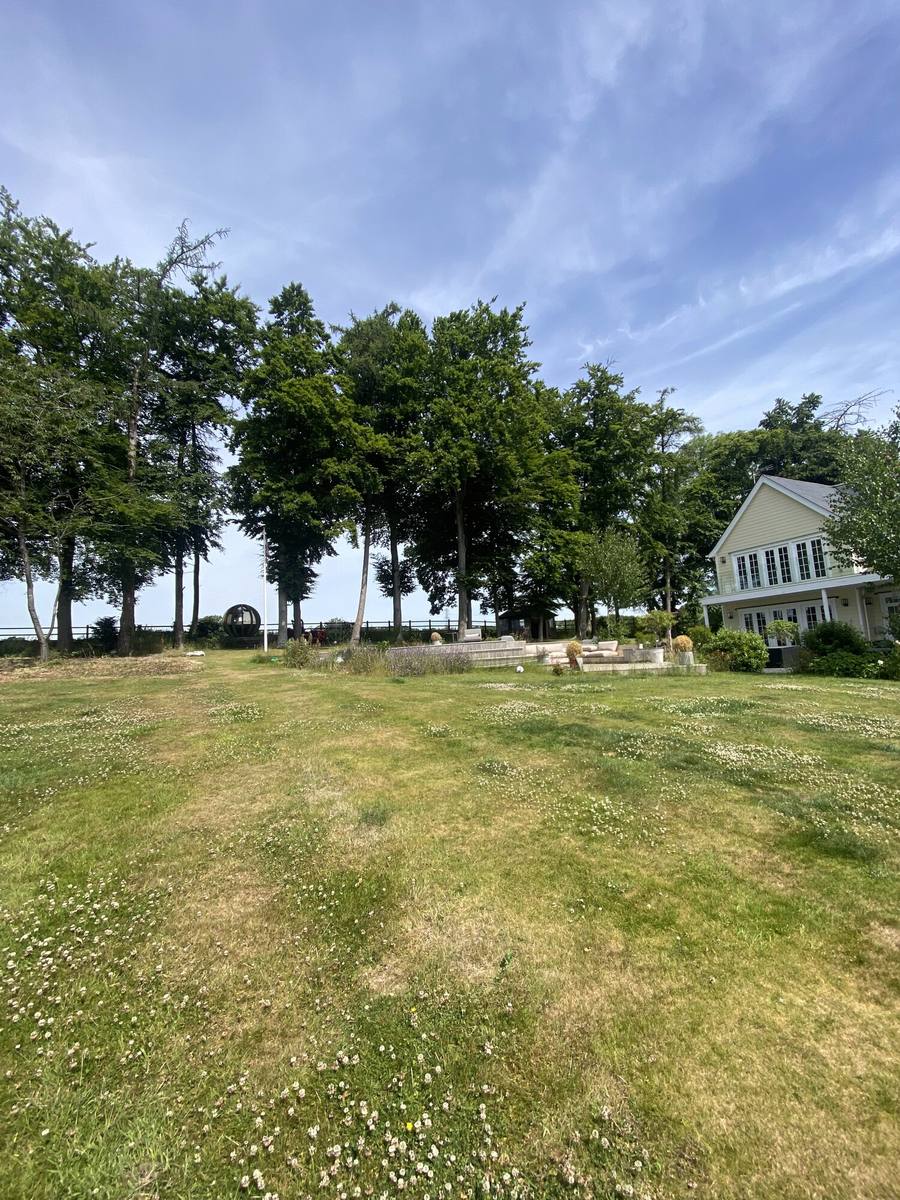
Turf is only as good as the ground preparation under it.
QUESTIONS WE GET ASKED
Why does my lawn go brown every summer?
Nearly always because there is too little soil under it. On the chalk around Berkhamsted and Tring there is often only a few inches before you hit solid chalk, so the grass has no root depth and no moisture reserve. Watering more is a sticking plaster. Relaying it onto a proper depth of imported topsoil fixes it for good.
When is the best time to lay turf?
Autumn is ideal — warm soil, reliable rain, and the lawn is established before it has to face a summer. Spring is good too. Turf can be laid in summer but only if you are prepared to water it seriously every day, and mid-winter laying on frozen or waterlogged ground is worth waiting out.
How much watering does new turf need?
A proper soaking every day for the first two to three weeks in warm weather, then tapering off. It needs to reach the soil underneath, not just wet the grass — lift a corner and check. Almost every new lawn that fails, failed from underwatering in the first fortnight.
Can you lay turf over my existing lawn?
No. It will not root through the old thatch, and you keep every problem the old lawn had. The old lawn comes off first.
Will grass grow under my trees?
In light dappled shade, yes, with a shade-tolerant mix, though it will always be thinner. In deep shade under a mature beech, conifer or dense evergreen, no — and nobody can sell you a turf that changes that. The realistic options are letting more light in with tree work, or replacing the grass with planting or paving. We would rather say so than take the money.
Can you sort the drainage as well?
Yes. On clay, and on gardens that sit wet all winter, drainage is usually the actual problem and the lawn is just the symptom. We look at where the water is coming from and where it can go, and price the ground works with the turf rather than after it.
BOOK A FREE SITE VISIT
We’ll walk the garden with you, go through your ideas, sketch a rough plan and take measurements. Your detailed quotation follows within 48 hours. No charge, no obligation.
GET A PRICE FOR A NEW LAWN
Call the office, ring Connor direct on 07738 008077, or book a visit online. Free, no obligation, and you get a detailed written quote afterwards.