
Home › Decking
StructuresDECKING
Decking earns its place where a patio would mean shifting tonnes of soil — a sloping garden, a raised area off the back of the house, ground you cannot easily level. Built on a proper frame, ventilated underneath, and not slippery in November.
Or call Connor direct on 07738 008077
Decking has a mixed reputation and it is mostly deserved — a lot of it was built badly in the early 2000s, on undersized frames sitting straight on soil, and it rotted and went slippery. Built properly it is an excellent answer to a problem that paving handles badly.
When decking beats a patio
- On a slope. A deck can be built out level on posts. Getting the same flat area in paving means excavation, a retaining wall and a great deal of muck away — often several times the cost
- Raised off the back of the house, where the ground drops away from the back door
- Over ground you cannot dig — tree roots, services, a made-up surface you would rather not disturb
- Where you want warmth underfoot. Timber is pleasanter to stand on barefoot than stone
Where the ground is already flat and firm, a patio will usually outlast a deck and need less of you. We will say which we think suits your garden, and it is not always the more expensive one.
The frame is the job
Everything that goes wrong with decking goes wrong underneath it.
- Ventilation. Air has to move under the deck. Boxed in tight to the ground, the frame stays damp and rots however well treated it was
- Posts on concrete, not soil. Timber in direct contact with wet ground rots at exactly the point that carries the load
- Joist spacing. Too far apart and the boards flex underfoot, which everyone notices and nobody can fix afterwards without lifting the lot
- Proper treated timber throughout the frame, and cut ends treated as you go — an untreated saw cut is an open door
- A fall, so water runs off rather than sitting on the boards
Timber or composite
Softwood
Cheapest, and fine if you will maintain it — cleaning and re-oiling every year or two. Left alone it goes grey and, in shade, slippery. Expect fifteen years or so from a good one.
Hardwood
Balau, ipe and similar. Considerably more expensive, considerably longer lasting, and it looks better as it ages. Worth asking about the source; we use responsibly sourced timber and will tell you where it comes from.
Composite
What most people choose now. Does not need oiling, does not splinter, will not rot, and the decent grades are properly non-slip — which matters far more than people expect on a shaded deck in a Chiltern winter. It costs more to buy, it gets hot in strong sun, and it is the right answer if you want to stop thinking about it.
The things people forget
- Slip resistance. A north-facing deck under trees will green up. Grooved boards help a little; a good composite helps a lot; cleaning helps most
- Height and privacy. A raised deck can overlook a neighbour’s garden in a way a patio does not, which is both a planning question and a neighbour question. Generally a deck over 300mm high can need planning permission — we will flag it if yours is close
- Balustrade. Anything raised needs a handrail, built to actually take someone’s weight against it
- What lives underneath. A ventilated deck is a good place for wildlife and a bad place for rubbish. Leave access to sweep it out
How we work
- Free site visit. We walk the garden with you, talk it through, sketch a rough plan on the spot and take measurements
- Detailed written quotation within 48 hours. Itemised, so you can see what each part costs and leave out anything you’d rather not do yet
- We build it on agreed dates, with our own team doing the clearing, groundwork and construction
- Everything goes. We’re licensed waste carriers, so the spoil and arisings leave legally and the paperwork exists
We don’t put prices on the website. The same job on a flat plot with a drive to the back, and on a sloping garden you can only reach through the house, are genuinely different jobs — any figure here would be a guess. The visit is free and gets you a real number.
Related work
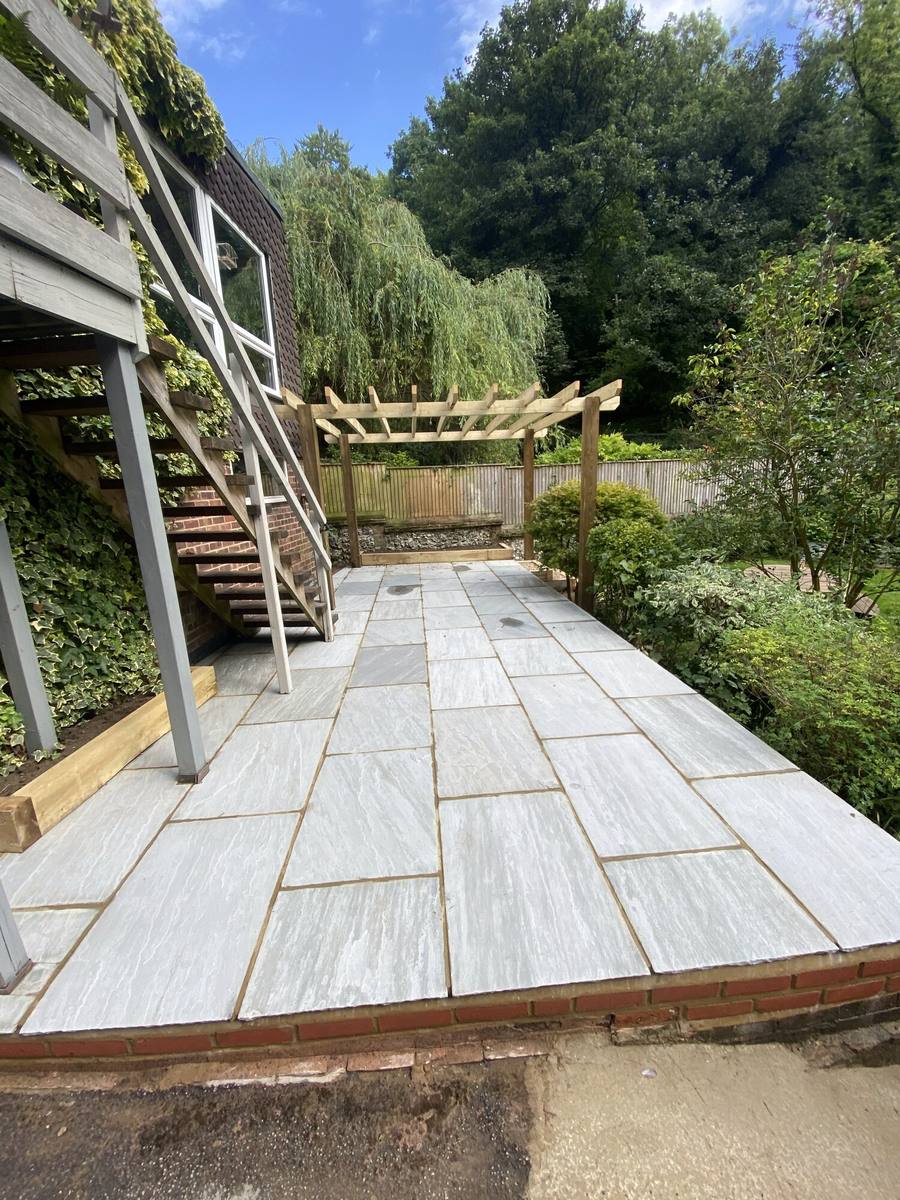
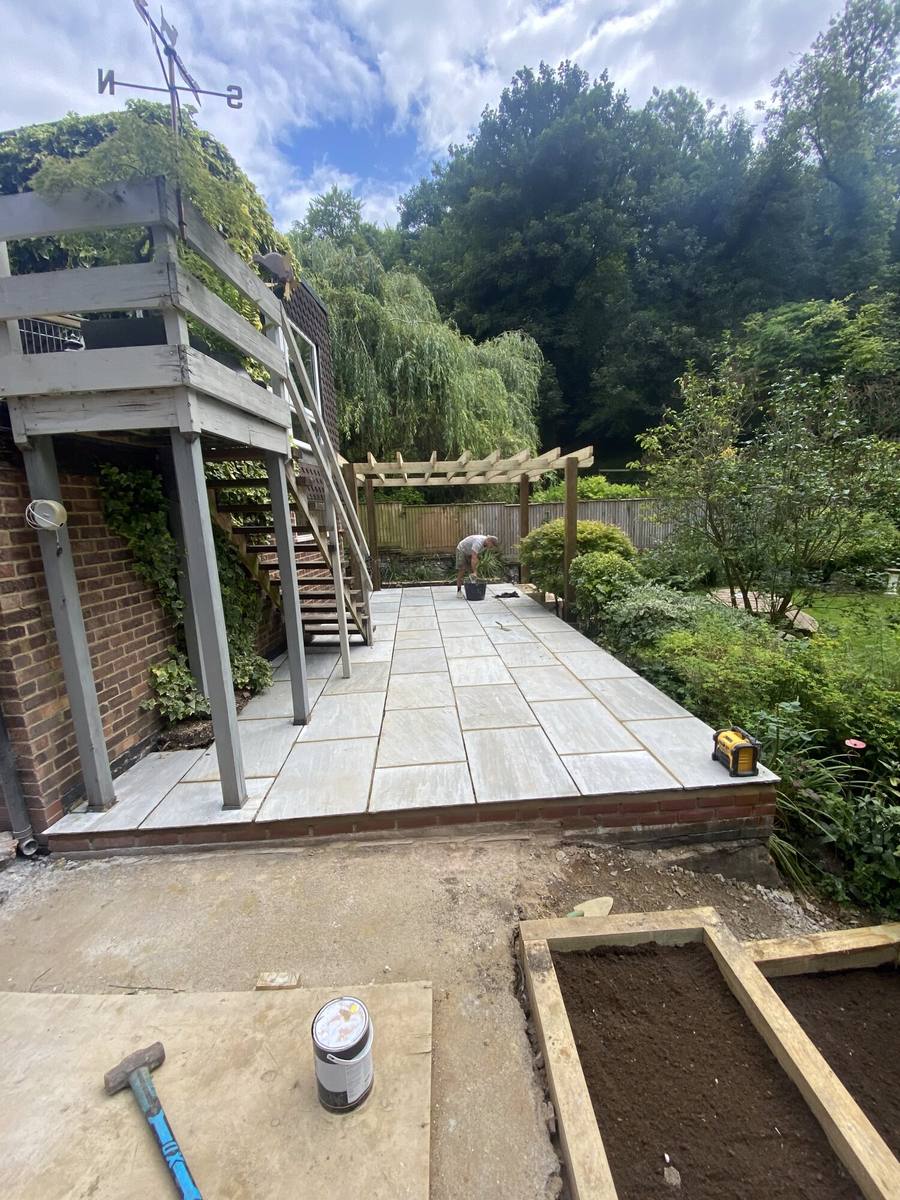
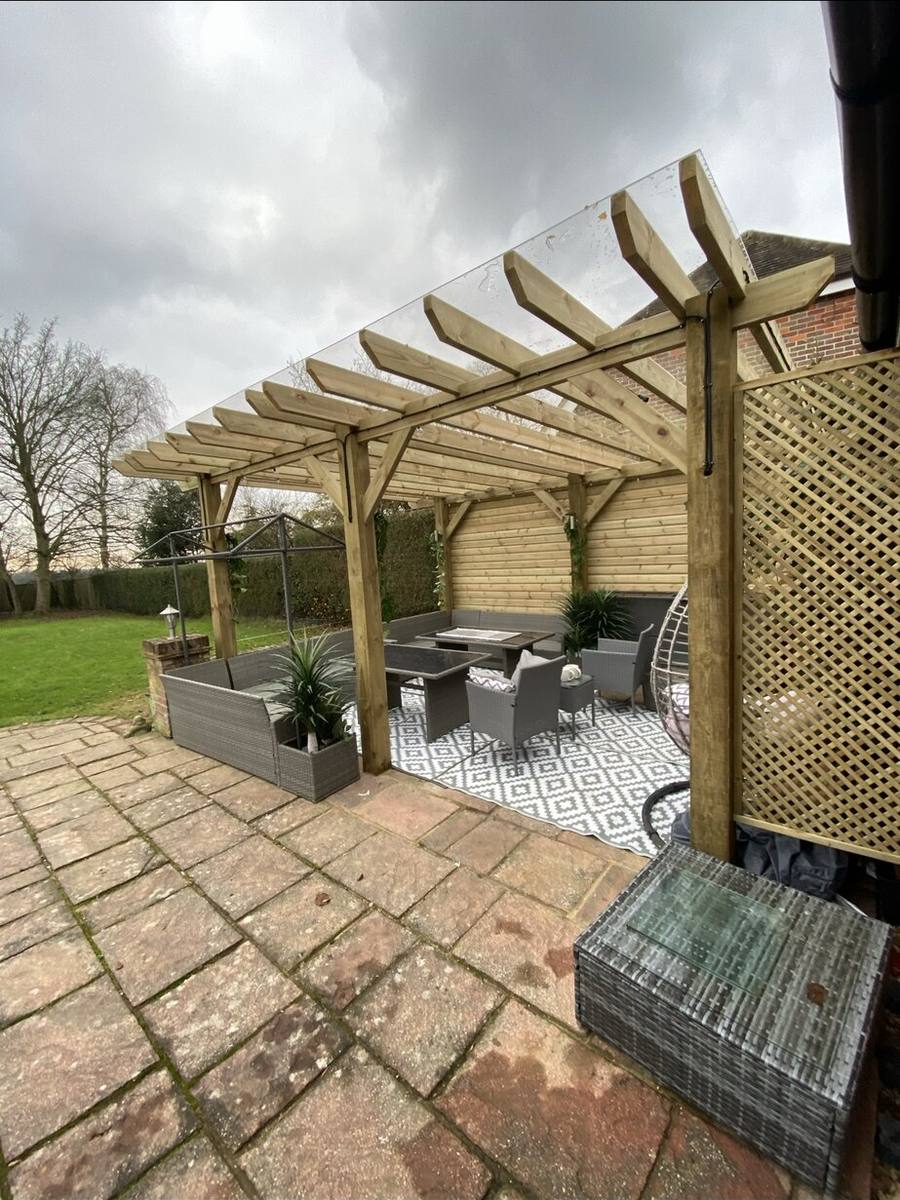
Decks, pergolas and raised terraces built into the levels rather than bolted on afterwards.
QUESTIONS WE GET ASKED
Timber or composite?
Composite if you would rather never maintain it — no oiling, no splinters, no rot, and the better grades grip well underfoot in winter. Softwood if you want the lowest price and you will genuinely clean and re-oil it. Hardwood if you want timber that lasts and looks better with age. We will show you samples at the visit.
Will it get slippery?
Any deck greens up in shade — it is algae, not the timber failing. A north-facing deck under trees is the worst case. Grooved boards help slightly, a good non-slip composite helps a great deal, and regular cleaning helps most of all. If your spot is shaded, that should decide the material.
Do I need planning permission for decking?
Usually not at ground level, but a raised deck over about 300mm can need it, and so can anything that significantly overlooks a neighbour. It is also different in conservation areas and on listed buildings. We will tell you at the visit if yours is a case worth checking rather than building it and finding out.
How long will it last?
A well-built softwood deck that gets looked after, around fifteen years. Hardwood, considerably longer. Composite boards, longer again — but the frame underneath is usually timber whatever the boards are, which is exactly why we build the frame properly and ventilate it.
Can you build a deck over my old one?
We would rather not. You inherit whatever is wrong with the old frame, which is normally the reason it needs replacing. We take it up, look at what is underneath and build from there.
Decking or a patio on a slope?
On a genuine slope, decking is often much cheaper — a deck is built out level on posts, whereas the same flat area in paving means digging out, a retaining wall and a lot of spoil carted away. On flat, firm ground a patio will usually last longer for less. We will tell you which your garden suits.
BOOK A FREE SITE VISIT
We’ll walk the garden with you, go through your ideas, sketch a rough plan and take measurements. Your detailed quotation follows within 48 hours. No charge, no obligation.
GET A DECK PRICED
Call the office, ring Connor direct on 07738 008077, or book a visit online. Free, no obligation, and you get a detailed written quote afterwards.