
Home › Fencing
BoundariesFENCING THAT STAYS UP
Fences fail at the posts, always. We use the right post for the job, set them in concrete at a proper depth, and step them correctly down a slope so you are not left with gaps underneath. Closeboard, panels, post and rail and trellis across Bucks and Herts.
Or call Connor direct on 07738 008077
Nobody ever rings up about a fence because the panels have worn out. They ring because a post has snapped at ground level in a gale and taken three panels with it. Everything that matters about a fence is in the posts and how they are set.
What we fit
Closeboard
Vertical featheredge boards nailed onto arris rails, built on site rather than dropped in as a unit. It is the strongest timber fence you can put up, it can follow a slope smoothly instead of stepping, and individual boards can be replaced without dismantling anything. If you want a fence that lasts, this is it.
Panels
Overlap or featherboard panels between posts. Quicker and cheaper, easy to replace one at a time, and perfectly good on a sheltered boundary. On an exposed run they act as a sail, which is why panel fences are what you see lying in the road after a storm. On exposed boundaries we use heavier posts and, where it suits, a hit-and-miss panel that lets the wind through.
Post and rail
For paddocks, long field boundaries and the more rural edges of properties out towards Ashridge, the Chalfonts and the Missendens. Cheap per metre, sympathetic to a rural setting, and easily made stock-proof with wire.
Trellis and screening
Added on top of a fence for privacy without the wind load of a solid panel, or used on its own to break a garden into areas. Worth knowing: adding trellis takes the fence over the two-metre limit in many cases, which is a planning question rather than a fencing one.
Posts — where fences live or die
- Concrete posts outlast timber by decades and are the sensible choice for a panel fence you never want to think about. They are unforgiving to look at, and they crack if a tree comes down on them
- Timber posts look far better, especially with closeboard, and last well if they are properly pressure-treated and set correctly. Cheap posts rot at ground level, which is exactly where the leverage is
- Depth. Roughly a third of the visible height goes in the ground, more on an exposed run. Set in concrete, with the concrete shaped to shed water away from the post rather than form a bowl round it
- Gravel boards keep the bottom of the fence out of the wet soil. Skipping them is why the bottom board rots first
Slopes
Half the gardens in Berkhamsted and plenty in Chesham run up or down hill. A panel fence on a slope has to be stepped, which leaves triangular gaps under each panel unless the gravel boards are cut to suit — that is the detail cheap jobs skip, and it is why dogs get out. Closeboard can be raked to follow the ground smoothly instead, which looks far better on a long slope. We will show you both at the visit.
Height, boundaries and neighbours
- Generally you can put up a fence to two metres without planning permission, or one metre where it fronts a road. Conservation areas and listed buildings have their own constraints
- Whose fence is it? Your deeds may say. If nobody knows, it is worth agreeing with the neighbour before you start rather than after
- You are entitled to erect a fence on your own land, and you cannot go onto next door’s land to do it without their agreement. That affects which side the posts and rails face — a conversation worth having early
Hedges instead, or as well
A fence gives you privacy on day one; a hedge gives you a better boundary in five years and takes ongoing work. Plenty of gardens want both — a fence for security with planting in front of it. We also maintain hedges, and where an old overgrown hedge is coming out and a fence is going in, that is one visit rather than two.
How we work
- Free site visit. We walk the garden with you, talk it through, sketch a rough plan on the spot and take measurements
- Detailed written quotation within 48 hours. Itemised, so you can see what each part costs and leave out anything you’d rather not do yet
- We build it on agreed dates, with our own team doing the clearing, groundwork and construction
- Everything goes. We’re licensed waste carriers, so the spoil and arisings leave legally and the paperwork exists
We don’t put prices on the website. The same job on a flat plot with a drive to the back, and on a sloping garden you can only reach through the house, are genuinely different jobs — any figure here would be a guess. The visit is free and gets you a real number.
Related work
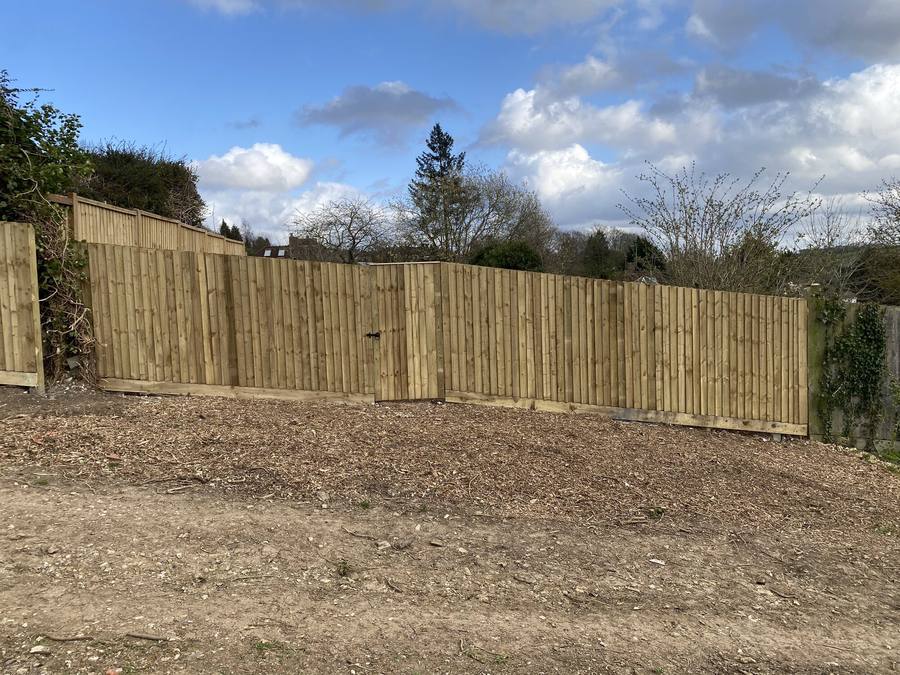
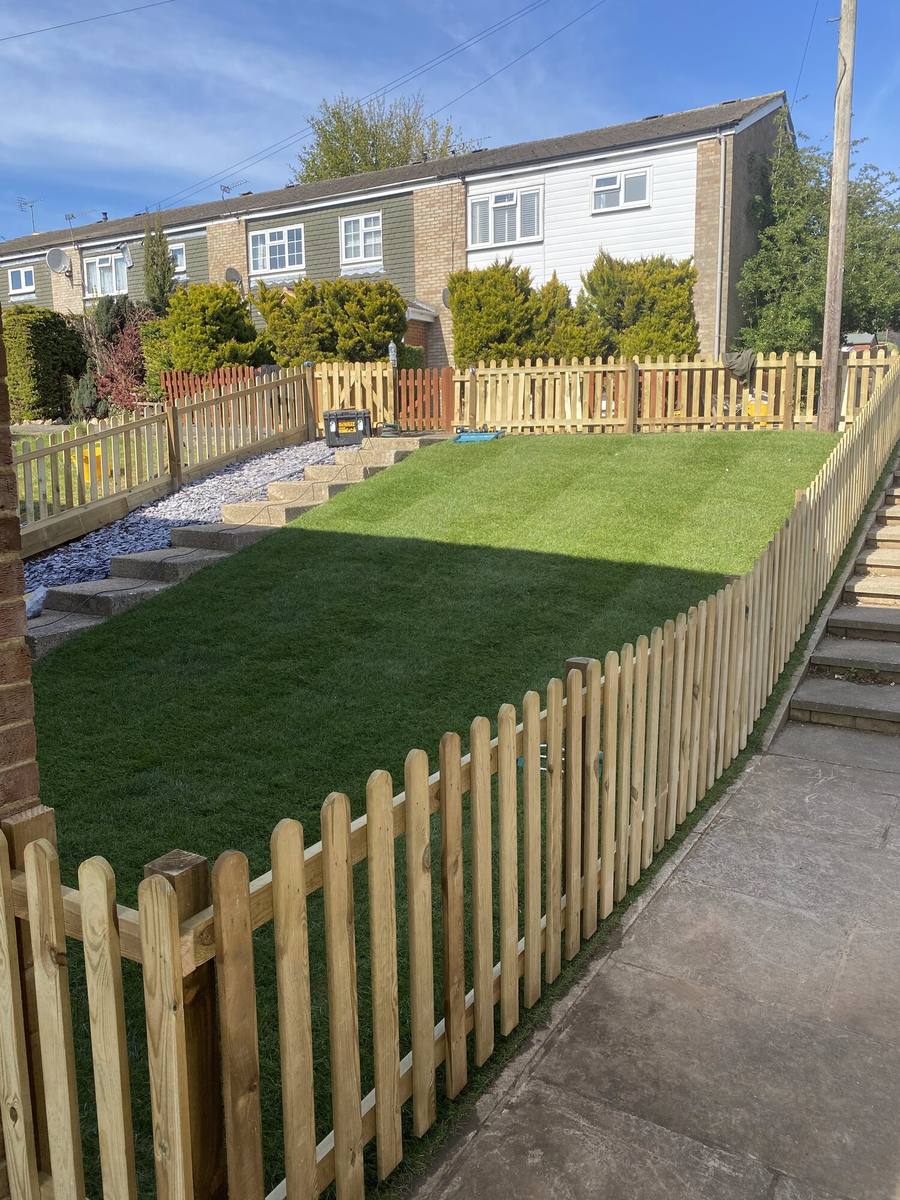
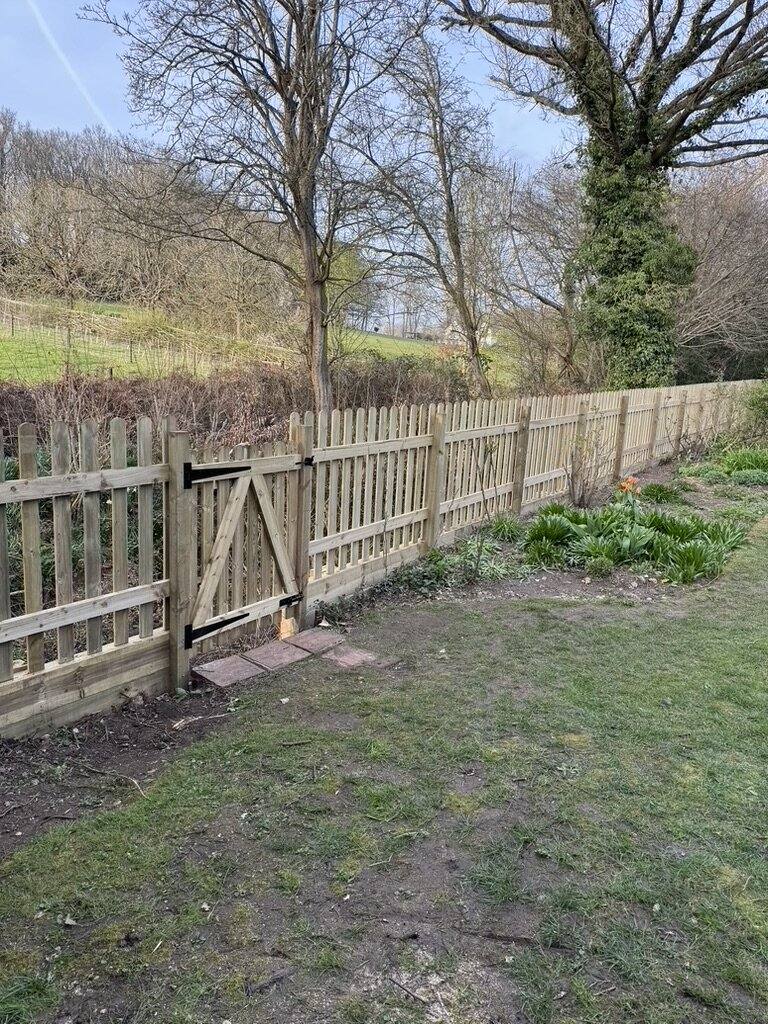
Close-board, picket and post and rail, on the flat and on banks.
QUESTIONS WE GET ASKED
How high can I build a fence without permission?
Generally two metres, dropping to one metre where the boundary fronts a highway. Conservation areas, listed buildings and some estates have extra restrictions, and adding trellis on top counts towards the height. We will flag it at the visit if your job is near the limit.
Concrete posts or timber?
Concrete lasts longest and is the practical choice for panel fencing. Timber looks far better and is the right choice with closeboard, provided it is properly treated and set deep in concrete. On an exposed boundary we would usually push you towards concrete, or heavier timber than the standard.
My fence blew down. Can you replace just the broken bit?
Usually yes, and often that is the sensible answer. But if the posts are original and rotten at ground level, replacing three panels buys you one winter. We will tell you honestly which it is rather than quoting for the whole run automatically.
Whose fence is it, mine or my neighbour’s?
Your deeds sometimes show it with a T-mark on the boundary you are responsible for. Often nothing is recorded and it comes down to what has always happened. Either way it is much easier to agree it with next door before work starts — we can only work from your side of the line unless they have agreed otherwise.
Can you fence a sloping garden without gaps underneath?
Yes. Either stepped panels with the gravel boards cut to follow the ground, or closeboard raked to run smoothly down the slope. The smooth option looks better and is what we would normally suggest on a long run. Gaps under a stepped fence are a shortcut, not an inevitability.
Do you take the old fence away?
Yes, including the old concrete post footings, which is the part that takes the time. It all goes legally — we are licensed waste carriers.
BOOK A FREE SITE VISIT
We’ll walk the garden with you, go through your ideas, sketch a rough plan and take measurements. Your detailed quotation follows within 48 hours. No charge, no obligation.
BOOK A FREE FENCING VISIT
Call the office, ring Connor direct on 07738 008077, or book a visit online. Free, no obligation, and you get a detailed written quote afterwards.