Home › Tree reduction & pruning
Tree careREDUCTION & PRUNING
Most trees people want removed do not need removing. Too much shade, branches on the roof, a gutter full of leaves — a proper reduction solves all three, costs less, and you keep a tree that took eighty years to grow.
Or call Connor direct on 07738 008077
There is a real difference between pruning a tree and cutting bits off it, and you can see it from the road. Done properly, a reduced tree still looks like that species — it keeps its shape, just smaller. Done badly, you get a hat-stand: stubs, no leaves, and a mass of weak regrowth two years later.
What we actually do
Crown reduction
Taking the overall size down while keeping the tree’s natural shape. Cuts are made back to a suitable side branch that can take over as the new leader, not chopped off in mid-air. Usually a 15–30% reduction — go much harder than that and you stress the tree into throwing out weak, dense regrowth that is worse than what you started with.
Crown thinning
Removing a proportion of the smaller inner branches to let light and wind through, without changing the tree’s size or outline. Good for getting light onto a lawn or a window when the tree’s height is not the problem. Also reduces the sail effect in a gale.
Crown lifting
Taking off the lowest branches to get clearance underneath — over a drive, a path, a lawn you want to mow, or a pavement. Often the single most useful thing you can do to a mature tree, and the least damaging.
Deadwooding
Taking out dead branches. Mostly a safety job — deadwood over a patio, a parking space or a footpath is what falls in the first proper wind. It does not change how the tree looks and it is quick.
Formative pruning
On a young tree, taking out crossing and competing branches so it grows with good structure. Ten minutes now saves a major job in thirty years.
What we will not do
Topping. Cutting a tree’s crown off across the top is still surprisingly common and it is bad practice on almost every species. It leaves large wounds that decay inwards, provokes a mass of weakly attached regrowth, and leaves you with a tree that is more dangerous in ten years than it was before, and uglier immediately. If a tree really is too big for where it is, the honest answer is usually removal and replanting with something appropriate, not topping.
We will say so rather than take the money. If someone has quoted you for topping, that is worth a second opinion.
Timing
- Most broadleaves — winter, when the tree is dormant and you can see the structure
- Cherry, plum and the rest of the prunus family — summer only. Pruning these in winter invites silver leaf disease and bacterial canker
- Birch, maple, walnut, hornbeam — not in late winter or early spring; they bleed sap heavily. Late summer is better
- Oak — avoid spring and early summer where oak processionary moth is a concern, and be aware of restrictions
- Nesting birds — protected while nesting, roughly March to August. We check before working in a canopy and postpone that section if there is an active nest. This is a legal requirement, not a preference
Deadwooding and safety work can be done at any time of year.
Protected trees
Reduction work on a tree in a conservation area or with a Tree Preservation Order needs the council’s consent first, exactly like removal does. The good news is that councils approve sensible reduction work far more readily than felling — so if the aim is more light, applying to reduce is a much better bet than applying to remove. We check, write the application and deal with the tree officer. See protected trees.
How we work
- Free site visit. We walk the garden with you, talk it through, sketch a rough plan on the spot and take measurements
- Detailed written quotation within 48 hours. Itemised, so you can see what each part costs and leave out anything you’d rather not do yet
- We build it on agreed dates, with our own team doing the clearing, groundwork and construction
- Everything goes. We’re licensed waste carriers, so the spoil and arisings leave legally and the paperwork exists
We don’t put prices on the website. The same job on a flat plot with a drive to the back, and on a sloping garden you can only reach through the house, are genuinely different jobs — any figure here would be a guess. The visit is free and gets you a real number.
Related work
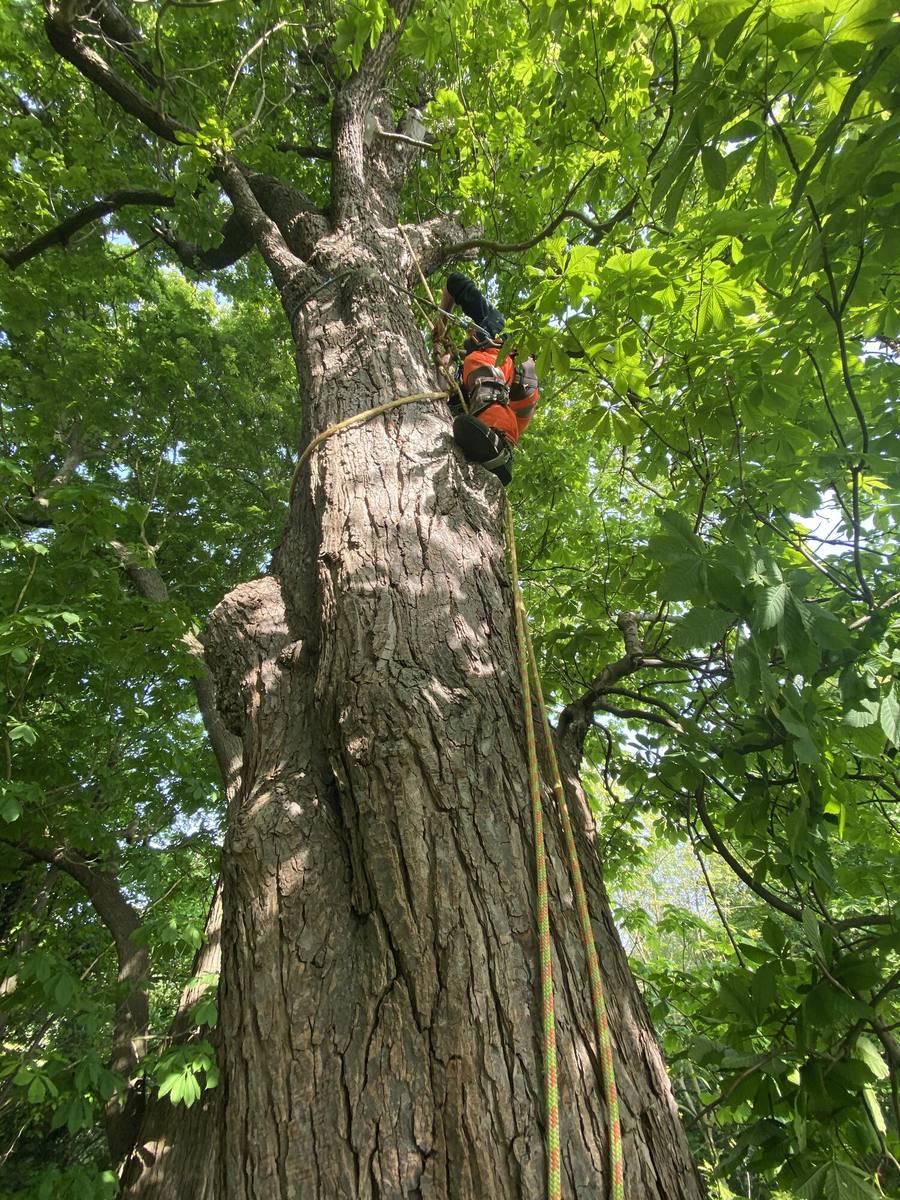
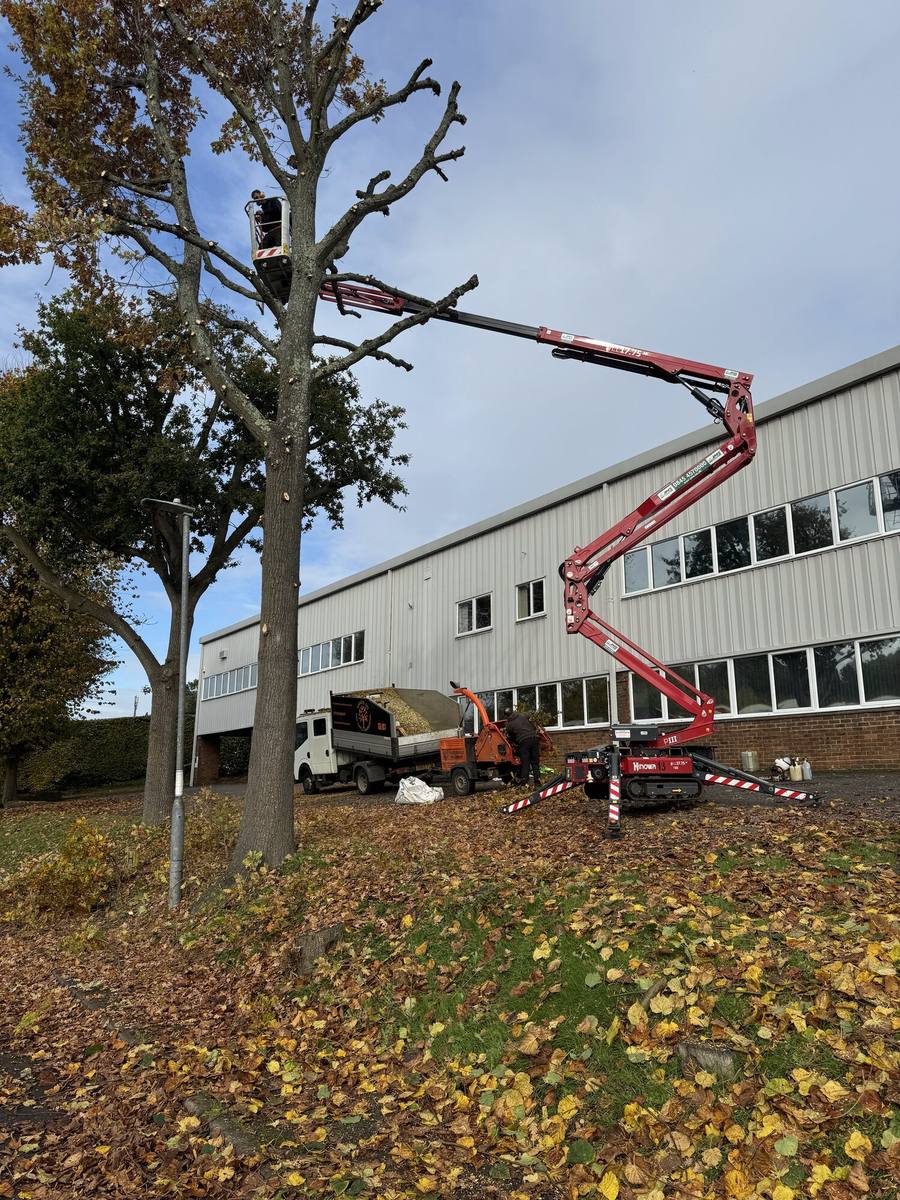
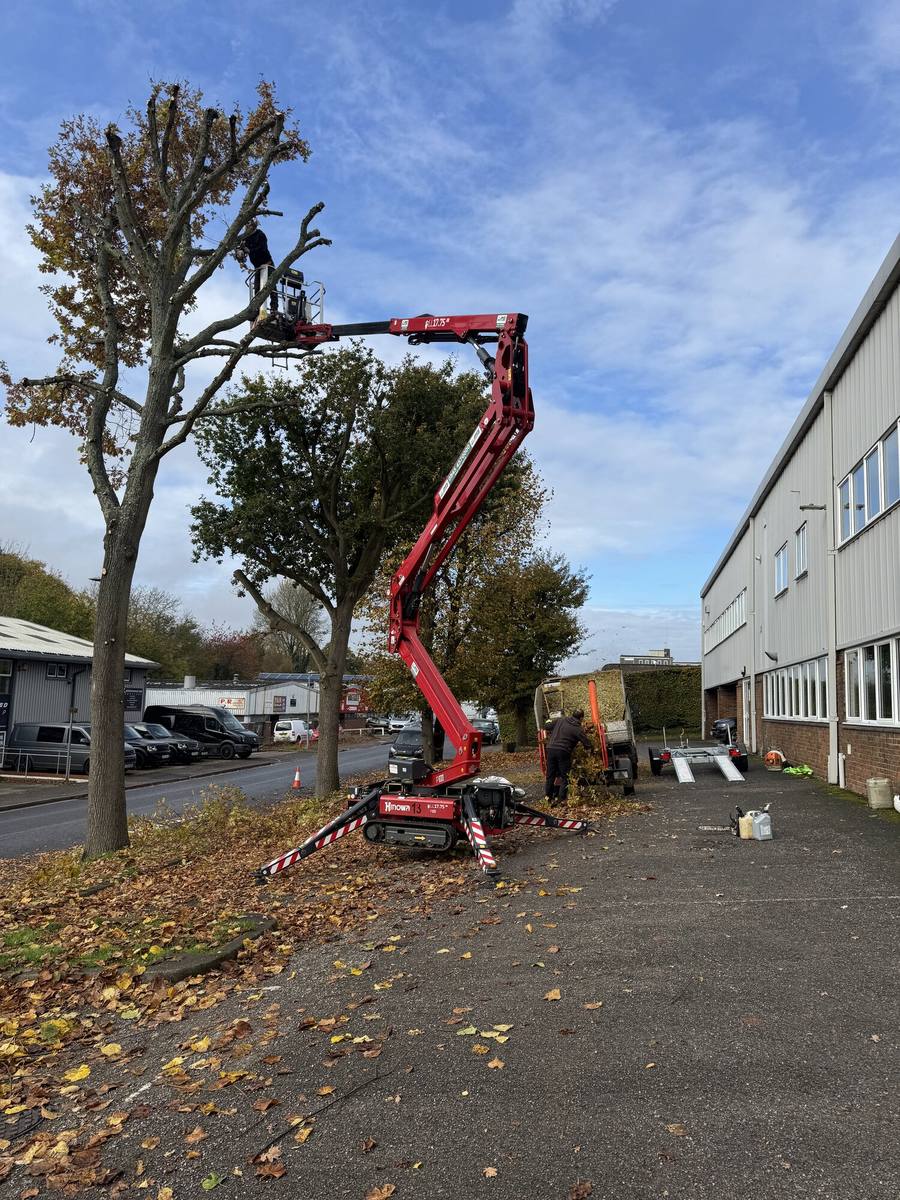
Climbed or worked from a platform, whichever is the safer option on the day.
QUESTIONS WE GET ASKED
Can you just cut the top off? It is blocking my light.
We would rather not, and here is why: topping leaves big wounds that rot inwards and provokes a mass of weak regrowth, so in ten years you have a tree that is denser, uglier and more likely to shed a limb. A proper crown reduction takes the size down while keeping the shape, and a crown thin or lift often solves a light problem better than height reduction does. If the tree genuinely is too big for the spot, removal and replanting is the honest answer.
How much can you take off?
Usually 15 to 30 per cent. Beyond that you stress the tree, and stressed trees respond with dense weak regrowth that puts you back where you started within a few years, only worse. We will tell you at the visit what is realistic for your species.
When is the best time to prune?
Winter for most broadleaves. Summer for cherries, plums and other prunus — pruning those in winter risks silver leaf. Late summer for birch, maple and walnut, which bleed sap in spring. Safety work and deadwooding can happen any time. Nesting birds restrict canopy work between roughly March and August.
Will it grow back?
Yes, that is the point — a reduction is maintenance, not a permanent fix. Depending on species and how vigorous the tree is, expect to look at it again in three to five years. Crown lifting lasts longer than height reduction.
Do I need permission to prune?
If the tree is in a conservation area or has a preservation order on it, yes — pruning counts, not just felling. We check for free before quoting. Councils are considerably more willing to approve sensible reduction than removal, which is worth knowing if light is your actual problem.
My neighbour’s tree overhangs my garden. Can I cut it?
You have a common law right to cut back to the boundary, and you have to offer the cuttings back to them. But if the tree is protected you still need council consent exactly as the owner would — and that catches a lot of people out. Talk to us first, and ideally to the neighbour.
BOOK A FREE SITE VISIT
We’ll walk the garden with you, go through your ideas, sketch a rough plan and take measurements. Your detailed quotation follows within 48 hours. No charge, no obligation.
GET YOUR TREE LOOKED AT
Call the office, ring Connor direct on 07738 008077, or book a visit online. Free, no obligation, and you get a detailed written quote afterwards.