
Home › Garden walls & brickwork
StructuresRETAINING & GARDEN WALLS
A wall holding back a bank is doing a structural job, and it fails in slow motion — a lean, then a bulge, then a collapse three winters later. Footings, drainage and the right build are what stop that, and they are all invisible when it is finished.
Or call Connor direct on 07738 008077
This is the most-asked-for job on our patch, because so many gardens round here are on a slope — the valley sides in Berkhamsted, the ground climbing out of Chesham, the Gade valley in Hemel. Turning a slope into usable flat space means holding the ground back, and that means a wall that is engineered rather than decorated.
Why retaining walls fail
Almost always one of three things, and all three are cheap to skip and expensive to fix:
- No proper footing. A retaining wall carries the weight of the soil behind it plus the water in that soil. It needs a concrete foundation sized for the job and taken below the level frost reaches, not a course of blocks bedded on the ground
- No drainage behind it. Wet soil is enormously heavier than dry soil, and water with nowhere to go pushes the wall over. A retaining wall needs free-draining stone behind it, a perforated land drain at the base, and weep holes through the face. Leave them out and the wall becomes a dam
- Wrong build for the height. A knee-high edging wall and a wall holding back a metre and a half of bank are not the same thing built taller. Above about a metre the whole design changes — thickness, reinforcement, footing size
You cannot see any of this on a finished wall, which is exactly why it gets left out of cheap quotes. If a price seems low for a retaining wall, ask what the footing is and what is going behind it.
What we build
Brick
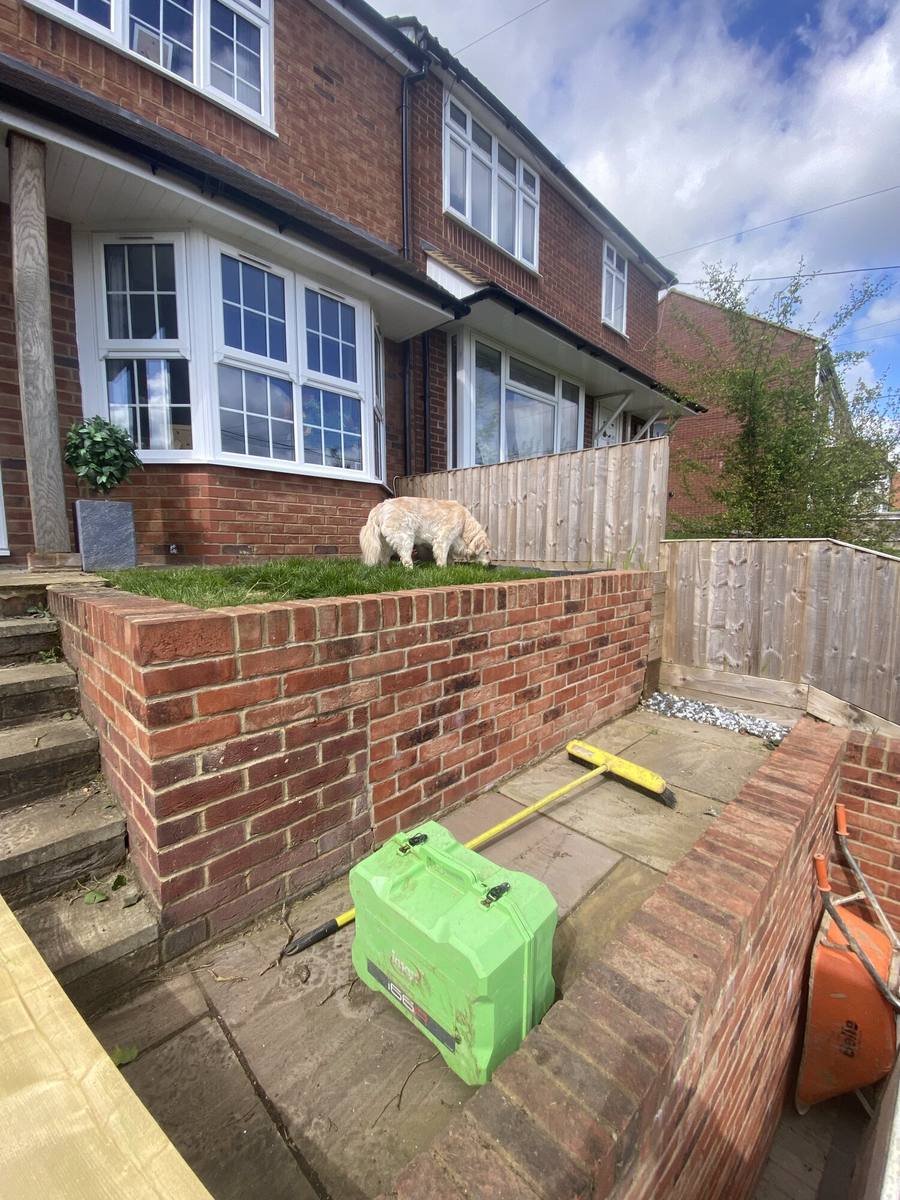
The right answer where the wall is on show and the house is brick — matched as closely as we can get, in a bond that suits it. Frost-resistant brick below ground level, and a proper coping on top, because a wall that takes water in through its top is a wall that spalls.
Block, faced
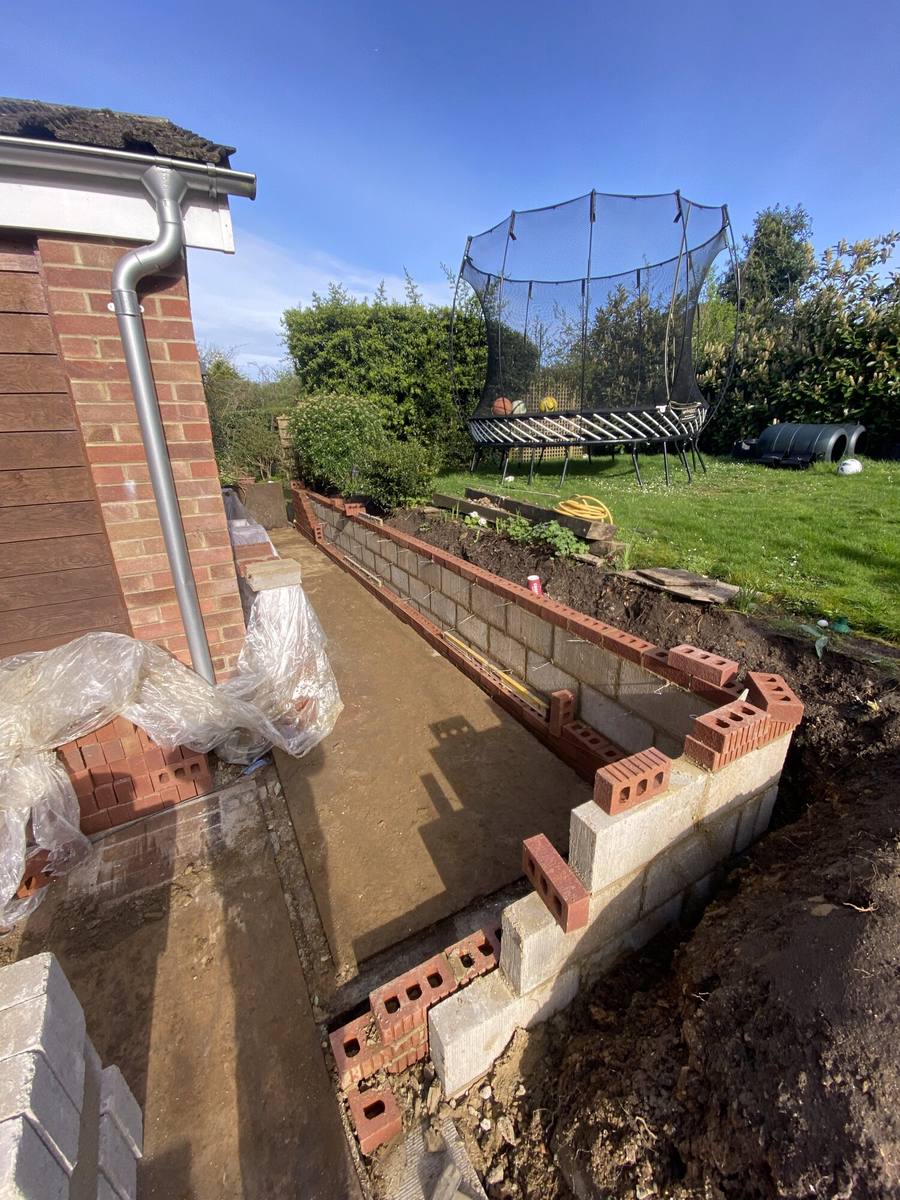
Dense concrete block doing the structural work, faced with brick or stone. Cheaper and stronger than solid masonry for anything substantial, and nobody can tell once it is finished.
Stone
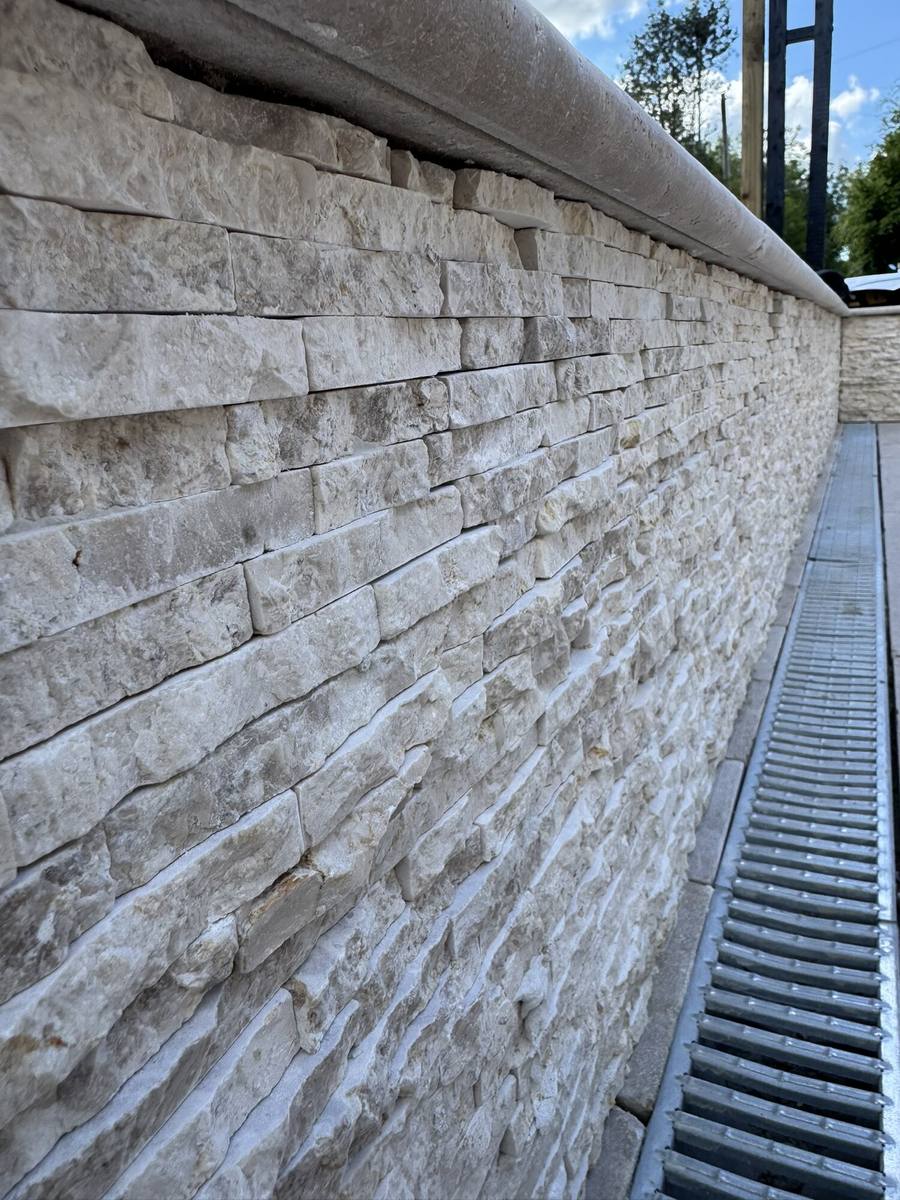
Flint, limestone and reclaimed stone, for older properties where brick would look wrong — and there are plenty around Chesham, Old Amersham and central Berkhamsted. Slow work and it shows.
Sleepers
Timber sleepers, properly retained with steel or posts driven behind them rather than just stacked. Quick, honest, considerably cheaper, and they suit an informal garden. They will not last as long as masonry — twenty years or so — and we will say that rather than sell them as permanent.
Gabions
Stone-filled cages. Cheap for a big retaining job, free-draining by nature so the water problem largely solves itself, and they suit a rural setting. Not to everyone’s taste on a formal garden.
Height, and when it stops being our decision
Low garden walls are ordinary work. Once a retaining wall gets substantially over a metre, or it is holding back ground next to a neighbour’s property, a building, or a public footpath, it can need building regulations approval and sometimes a structural engineer’s design. We will tell you at the visit if yours is one of those, rather than building it and hoping. It is not a common outcome, but it is not rare either on the steeper plots.
The rest of the brickwork
- Steps between terraces — built into the wall, not bolted on afterwards
- Raised beds, which are retaining walls in miniature and want the same drainage thinking
- Pillars and piers for gates, and the gate posts set to actually carry a gate
- Repairs — repointing, rebuilding a leaning section, replacing a failed coping
Trees and walls
Digging a footing through a mature tree’s roots can kill the tree and destabilise the wall you are building. If the tree is protected, damaging it is an offence in itself. Because we do the tree work as well, we design the wall line around what is there. See protected trees.
How we work
- Free site visit. We walk the garden with you, talk it through, sketch a rough plan on the spot and take measurements
- Detailed written quotation within 48 hours. Itemised, so you can see what each part costs and leave out anything you’d rather not do yet
- We build it on agreed dates, with our own team doing the clearing, groundwork and construction
- Everything goes. We’re licensed waste carriers, so the spoil and arisings leave legally and the paperwork exists
We don’t put prices on the website. The same job on a flat plot with a drive to the back, and on a sloping garden you can only reach through the house, are genuinely different jobs — any figure here would be a guess. The visit is free and gets you a real number.
Related work
Brick and stone, retaining and free-standing, with the drainage designed in.
QUESTIONS WE GET ASKED
Why is a retaining wall so much more than a normal garden wall?
Because most of it is underground and out of sight. It needs a concrete footing sized for the load, free-draining stone and a land drain behind it, and weep holes through the face. That is a lot of excavation and material before a single visible brick goes on. A retaining wall priced like a decorative one has had all of that left out.
My wall is leaning. Can it be repaired?
Sometimes a section can be rebuilt, but a lean usually means the footing or the drainage was wrong from the start, and rebuilding on the same foundation buys you a few years. We will look and tell you honestly which it is. If the ground behind it is saturated, fixing the drainage is the actual repair.
Sleepers or brick?
Sleepers if you want it done quickly and cheaply and an informal look suits — expect around twenty years from them. Brick or faced block if you want it to outlive you and the wall is on show. Both need the same footing and drainage; the difference is the face, not the engineering.
Do I need permission for a garden wall?
Usually not for a low boundary wall — the general limits are two metres, or one metre where it fronts a road. A substantial retaining wall is different: over about a metre, or where it retains ground next to a building, a neighbour or a footpath, it can need building regulations approval. We will tell you if yours is one of those.
Can you match my house bricks?
Usually very closely. Exact matches on an older property are rarely possible — the bricks are not made any more and weathering has changed the ones you have — but we will get samples and show you before ordering rather than guessing.
How long does a wall take?
A modest garden wall, a few days. A retaining wall across a sloping garden, one to two weeks, and the excavation and footing usually take longer than the building. Brickwork also stops in hard frost, which can move dates in winter.
BOOK A FREE SITE VISIT
We’ll walk the garden with you, go through your ideas, sketch a rough plan and take measurements. Your detailed quotation follows within 48 hours. No charge, no obligation.
GET A WALL PRICED PROPERLY
Call the office, ring Connor direct on 07738 008077, or book a visit online. Free, no obligation, and you get a detailed written quote afterwards.