
Home › Driveways
Hard landscapingDRIVEWAYS BUILT TO TAKE THE WEIGHT
A drive carries a couple of tonnes of car every day, so the base matters even more than it does on a patio. Block paving, resin bound and gravel across Bucks and Herts — dug out properly, drained properly, and done to the rules on surface water.
Or call Connor direct on 07738 008077
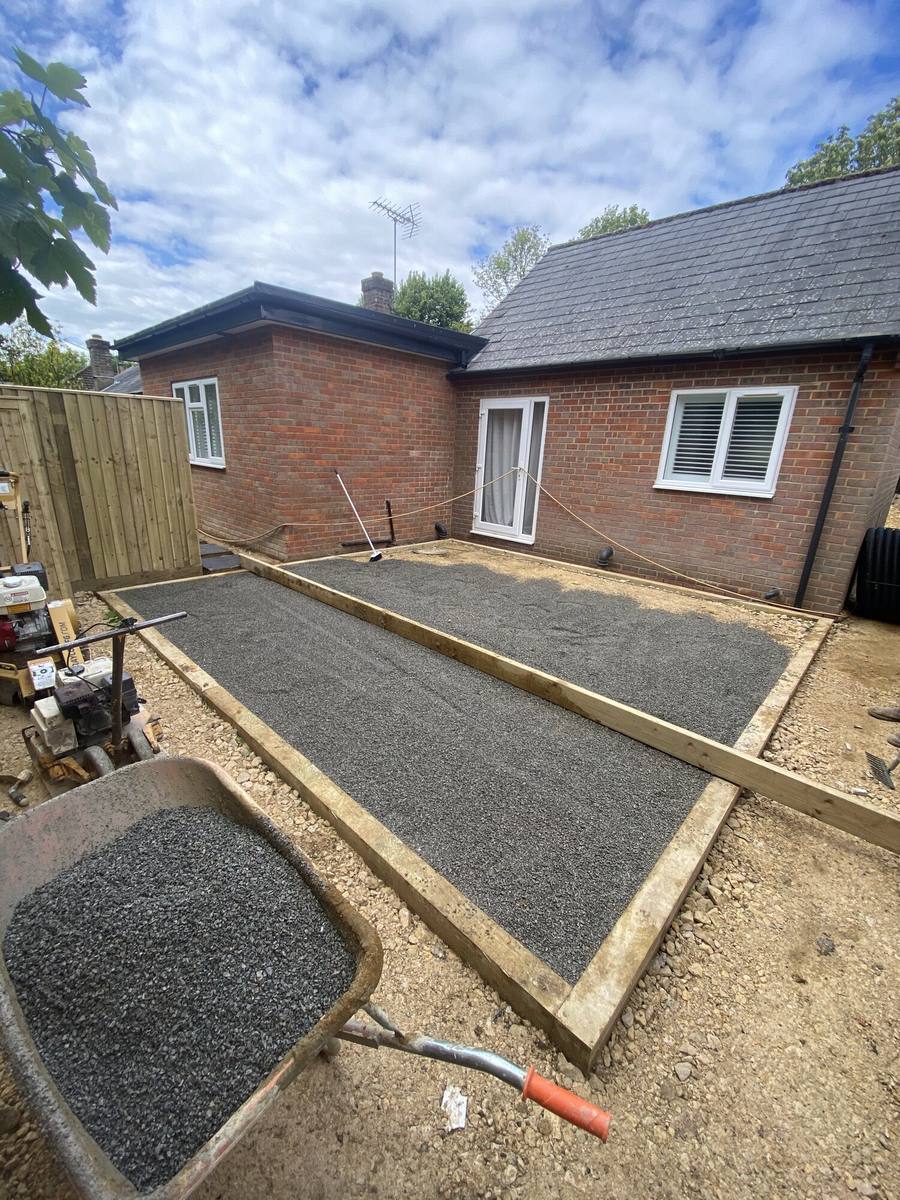
The difference between a drive that still looks right in fifteen years and one that is rutted and sunken in five is almost entirely underneath. A car park needs a deeper sub-base than a footpath, and a drive is a small car park. We excavate to the right depth, compact in layers, and only then lay the surface.
The drainage rule — and why it matters
Since 2008 you cannot lay a new impermeable drive of more than five square metres that drains straight onto the road without planning permission. It is not obscure and it is not optional; it exists because run-off from thousands of drives is what floods roads.
There are three ways to satisfy it, and all of them are ordinary:
- A permeable surface — permeable block paving or gravel, which lets water through into the sub-base
- Drainage to a border or soakaway on your own land, rather than to the road
- A channel drain across the entrance feeding into a soakaway
We build every drive to comply as a matter of course. If a quote you have been given does not mention drainage at all, that is worth a question.
Surfaces
Block paving
The default, and still the best value. Strong, repairable a block at a time if a service ever has to be dug up, and available in a permeable version that solves the drainage question outright. It needs a properly haunched edge course or the whole thing spreads.
Resin bound
Smooth, seamless, quiet underfoot, and permeable by nature. It looks superb on a modern house and it is the easiest surface to keep clean. It must go onto a sound base — usually new tarmac or concrete — so it is not a cheap way to cover a bad drive, whatever anyone tells you.
Gravel
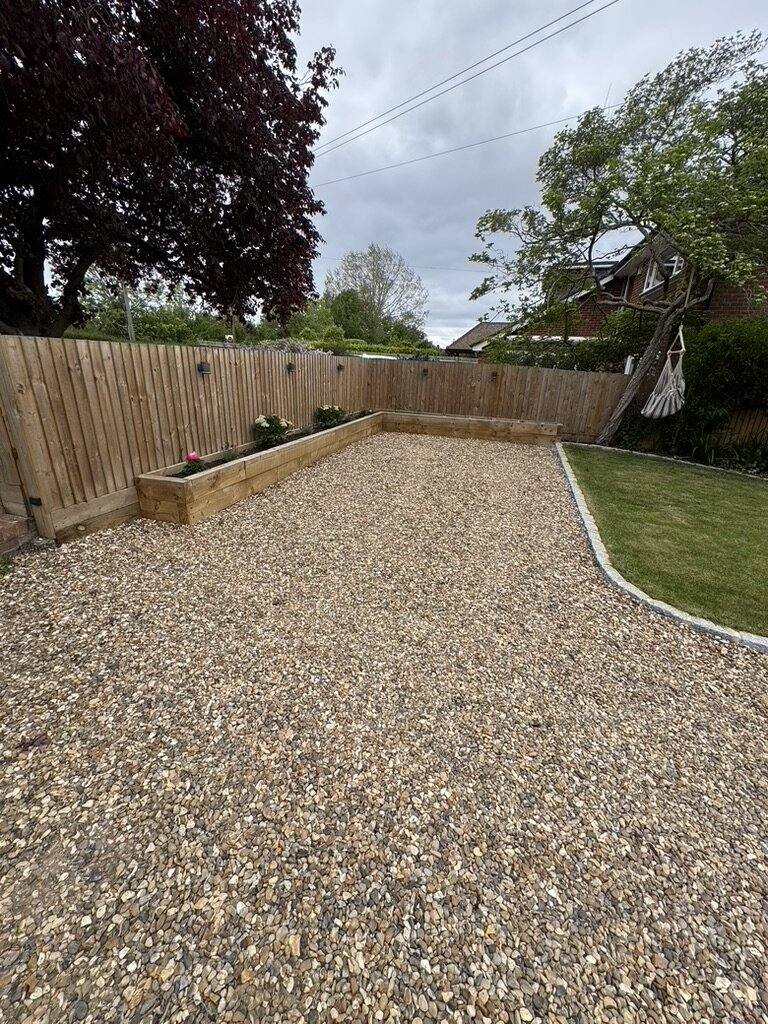
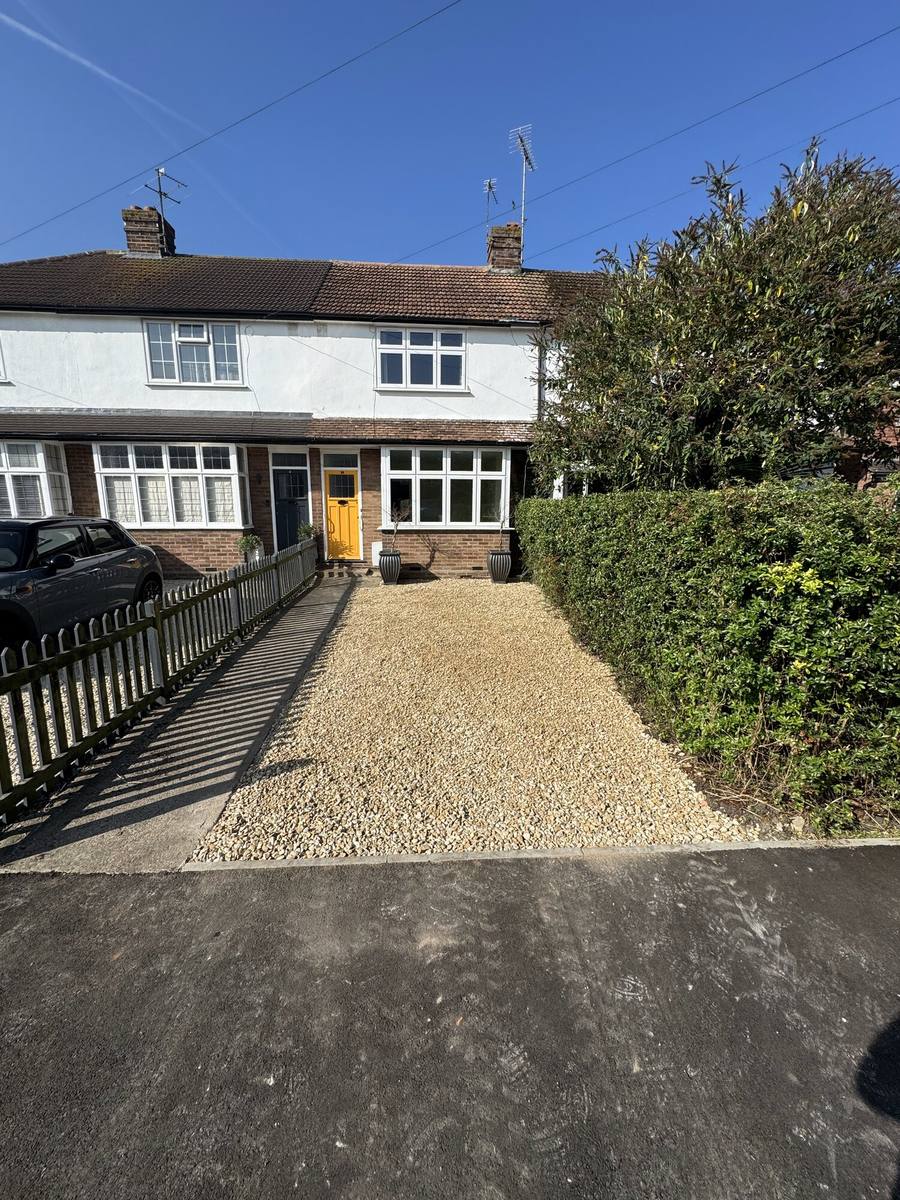
Much better than its reputation when it is done properly: a stabilising grid stops the migration and the rutting that gives loose gravel a bad name. Permeable, quick to lay, cheap to repair, and it suits older properties — the cottages and flint houses around Chesham and Old Amersham in particular.
The bits that get skipped
- Edge restraint. Blocks with nothing holding the perimeter will creep outwards under turning wheels. Every edge needs haunching in concrete
- Depth at the entrance. The first two metres take the worst of the load as cars turn in off the road. It should be built deeper, not the same
- Levels against the house. Same rule as a patio — the surface stays well below the damp course, and falls away from the building
- The dropped kerb. Widening or creating an entrance onto the public highway needs the council’s consent and a licensed contractor for the kerb itself. We will tell you if your job needs one
Steep drives
There are a lot of them round here — off Kingshill and Castle Hill in Berkhamsted, the roads climbing out of Chesham. A steep drive needs grip and it needs the water intercepted before it runs down and sits against the garage or the front door. That usually means a channel drain across the bottom feeding a soakaway, and a surface texture chosen for grip rather than looks. Smooth porcelain on a slope is a genuinely bad idea.
Trees and roots
Front gardens are where mature street and garden trees live, and excavating a drive through a root plate is one of the quickest ways to kill a tree or destabilise it. If it is protected — and many are, particularly in the conservation areas — damaging it is an offence. We check first and design around it. See protected trees.
How we work
- Free site visit. We walk the garden with you, talk it through, sketch a rough plan on the spot and take measurements
- Detailed written quotation within 48 hours. Itemised, so you can see what each part costs and leave out anything you’d rather not do yet
- We build it on agreed dates, with our own team doing the clearing, groundwork and construction
- Everything goes. We’re licensed waste carriers, so the spoil and arisings leave legally and the paperwork exists
We don’t put prices on the website. The same job on a flat plot with a drive to the back, and on a sloping garden you can only reach through the house, are genuinely different jobs — any figure here would be a guess. The visit is free and gets you a real number.
Related work
Gravel, block paving and resin — and the sub-base underneath, which is the part that decides how long it lasts.
QUESTIONS WE GET ASKED
Do I need planning permission for a new driveway?
Not if the surface is permeable, or if the water drains to a soakaway or border on your own land rather than onto the road. You do need it for a new impermeable drive over five square metres draining to the highway. We build to comply either way, so in practice this rarely becomes a problem — but it is worth knowing the rule exists.
How long does a driveway take?
Usually four days to a week and a half depending on size, how much has to come out, and whether there is a dropped kerb involved. The digging out and carting away is often the slowest part, especially where there is old concrete underneath.
Block paving, resin or gravel?
Block paving for value, strength and easy repair. Resin for looks and a smooth seamless finish, on a house where that suits. Gravel for older properties and for the lowest cost, provided it is laid over a stabilising grid so it stays put. All three can be done permeably.
Can you resurface my existing drive rather than dig it out?
Sometimes, if the base underneath is genuinely sound — we will tell you honestly at the visit. But most tired drives are tired because the base has failed, and putting a new surface over a failed base just buys you a couple of years. We would rather tell you that than take the money twice.
Will you sort the dropped kerb?
A new or widened entrance onto the public road needs council approval and the kerb work has to be done by a contractor approved by the highway authority. We will tell you whether your job needs one and point you at the right application — we do not want you finding out afterwards.
Do you do the drainage as part of it?
Yes, always. Channel drains, soakaways and permeable build-ups are part of the job, not an extra line we add later. A drive that dumps water at your front door or across the pavement is a badly built drive.
BOOK A FREE SITE VISIT
We’ll walk the garden with you, go through your ideas, sketch a rough plan and take measurements. Your detailed quotation follows within 48 hours. No charge, no obligation.
BOOK A FREE DRIVEWAY VISIT
Call the office, ring Connor direct on 07738 008077, or book a visit online. Free, no obligation, and you get a detailed written quote afterwards.